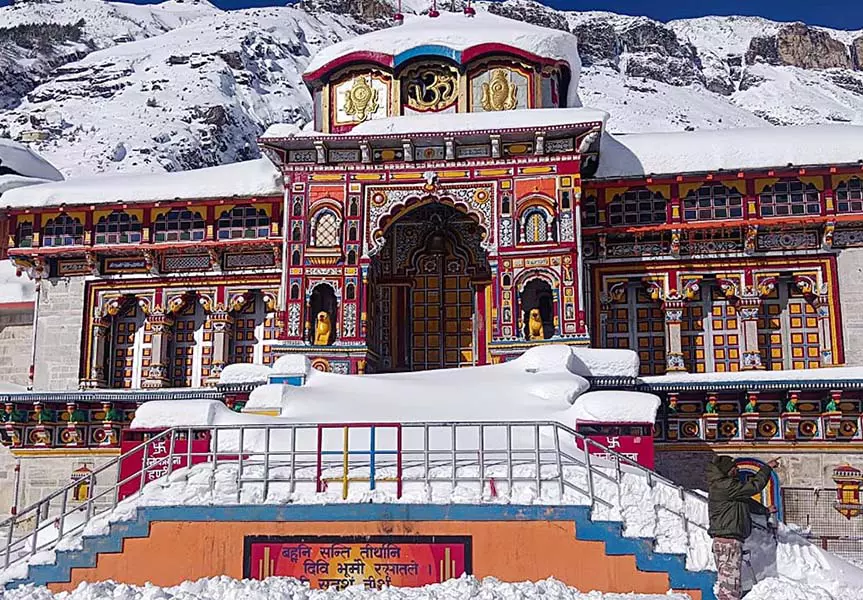
Badrinath – The Sacred Abode of Lord Vishnu in the Himalayas
Some places are remembered for their beauty, while others are remembered for the peace they leave in your heart. Badrinath Temple is one of those rare destinations where devotion, mythology and the Himalayas come together. Every year, thousands of pilgrims travel through the mountains of Uttarakhand not only to visit a temple but to experience one of the holiest spiritual journeys in India.
Situated on the banks of the Alaknanda River at an altitude of approximately 3,133 metres (10,279 feet), Badrinath is one of the four sacred shrines of the Himalayan Char Dham Yatra. It is also one of the 108 Divya Desams, making it one of the most revered temples dedicated to Lord Vishnu.
For many pilgrims, Badrinath is the final destination of the Char Dham pilgrimage. Completing darshan here is believed to mark the successful completion of one of Hinduism’s most sacred journeys. If you are planning the complete pilgrimage, you can explore our Char Dham Yatra Package for a comfortable and well-planned journey across all four dhams.
Where is Badrinath Located?
Badrinath is located in the Chamoli district along the banks of the Alaknanda River. The temple stands between the magnificent Nar and Narayan mountain ranges, while the snow-covered Neelkanth Peak rises dramatically behind the temple, creating one of the most breathtaking temple settings in the Himalayas.
Quick Facts
State – Uttarakhand
District – Chamoli
Elevation – 3,133 metres (10,279 feet)
River – Alaknanda River
Dedicated To – Lord Vishnu
One of the 108 Divya Desams
Part of the Char Dham Yatra
Nearby Town – Joshimath
Why is Badrinath So Sacred?
Unlike many temples that are associated with a single legend, Badrinath has been connected with several important events in Hindu tradition.
According to ancient beliefs, Lord Vishnu chose this peaceful Himalayan valley for meditation. Seeing the harsh weather, Goddess Lakshmi took the form of a Badri tree (wild berry tree) and protected him from snow and extreme cold. Pleased by her devotion, Lord Vishnu named the place Badri Nath, meaning “Lord of the Badri Forest.”
This legend beautifully explains why the temple is known as Badrinath and why the surrounding valley has remained a sacred place of meditation for centuries.
Adi Shankaracharya and Badrinath
The present importance of Badrinath is closely linked with Adi Shankaracharya.
During the 8th century, he travelled through the Himalayas and rediscovered the idol of Lord Badrinarayan, which was believed to have been hidden in the Alaknanda River to protect it during difficult times.
He re-established the temple as one of India’s foremost pilgrimage centres and played a major role in reviving pilgrimage traditions across the Himalayas.
Even today, millions of pilgrims continue to follow the spiritual path strengthened by Adi Shankaracharya.
Badrinath and the Char Dham Yatra
Among the four sacred shrines of Uttarakhand
Yamunotri
Gangotri
Kedarnath
Badrinath Temple
—Badrinath is traditionally visited last. Many pilgrims believe that completing darshan here marks the successful completion of the Char Dham Yatra.
If you wish to cover all four sacred shrines with comfortable hotels, experienced drivers and local assistance, you can explore our Char Dham Yatra Package.
Travellers visiting only Kedarnath and Badrinath can also explore our Do Dham Yatra Package.
Architecture of Badrinath Temple
The temple stands around 50 feet high and features a colourful façade that distinguishes it from many traditional stone temples of the Himalayas.
Inside the sanctum is the black stone idol of Lord Badrinarayan in a meditative posture. The idol is believed to be made of Shaligram stone, which holds great religious significance in Vaishnav traditions.
The temple complex also houses shrines dedicated to:
Goddess Lakshmi
Kubera
Nar and Narayan
Garuda
Narada
Its architecture beautifully blends Himalayan tradition with centuries of restoration and preservation.
Tapt Kund – The Sacred Hot Water Spring
Before entering the temple, pilgrims traditionally take a holy bath in Tapt Kund.
Despite the freezing Himalayan climate, the natural spring remains warm throughout the year. Many devotees believe that bathing here purifies the body before offering prayers at Badrinath Temple.
Best Time to Visit Badrinath
May to June
Pleasant weather, open roads and beautiful Himalayan scenery make this the busiest pilgrimage season.
July to August
The valley becomes lush and green, although heavy rainfall may occasionally affect road travel.
September to October
One of the most recommended seasons for visiting Badrinath. The post-monsoon skies remain clear, mountain views are spectacular and the crowd is comparatively smaller.
Winter
Heavy snowfall forces the temple to close. During winter, worship continues at Narsingh Temple in Joshimath until the temple reopens in summer.
How to Reach Badrinath
Badrinath is connected by a well-maintained mountain road.
Nearest major cities include:
Haridwar
Rishikesh
Dehradun
The route generally follows:
Haridwar → Rishikesh → Devprayag → Rudraprayag → Karnaprayag → Nandprayag → Chamoli → Pipalkoti → Joshimath → Badrinath
This scenic drive passes through the Panch Prayag region, making the journey itself one of the highlights of the pilgrimage.
Places to Visit Near Badrinath
A pilgrimage to Badrinath is incomplete without exploring the nearby sacred sites.
Mana
Known as the last Indian village before the Indo-Tibetan border, Mana is rich in mythology and traditional Himalayan culture.
Vyas Gufa
Believed to be the place where Sage Vyasa composed the Mahabharata.
Ganesh Gufa
According to tradition, Lord Ganesha wrote the Mahabharata here as Sage Vyasa dictated it.
Bheem Pul
A massive natural stone bridge associated with the Pandavas during their final Himalayan journey.
Saraswati River
One of the few visible sections of the sacred Saraswati River before it is believed to disappear underground.
Vasudhara Falls
A beautiful high-altitude waterfall located a few kilometres beyond Mana Village.
Travel Tips
Complete your pilgrimage registration before travelling.
Carry warm clothes in every season.
Spend a night in Joshimath or Pipalkoti if travelling from Haridwar.
Stay hydrated due to the high altitude.
Respect temple customs and local traditions.
Avoid littering in the Himalayan region.
Plan Your Badrinath Yatra with Travelophila
Whether you are planning a complete Char Dham Yatra, a Do Dham Yatra, or a dedicated Badrinath Tour Package, our local Uttarakhand team ensures comfortable hotels, experienced drivers and carefully planned itineraries so that you can focus entirely on your pilgrimage.