Rudraprayag – Where the Alaknanda Meets the Mandakini
- Home
- Destinations
- Rudraprayag – Where the Alaknanda Meets the Mandakini
About Rudraprayag
Some places become memorable because of their scenery, while others are remembered for the stories they carry through generations. Rudraprayag is one of those rare places where nature and spirituality come together in a remarkable way.
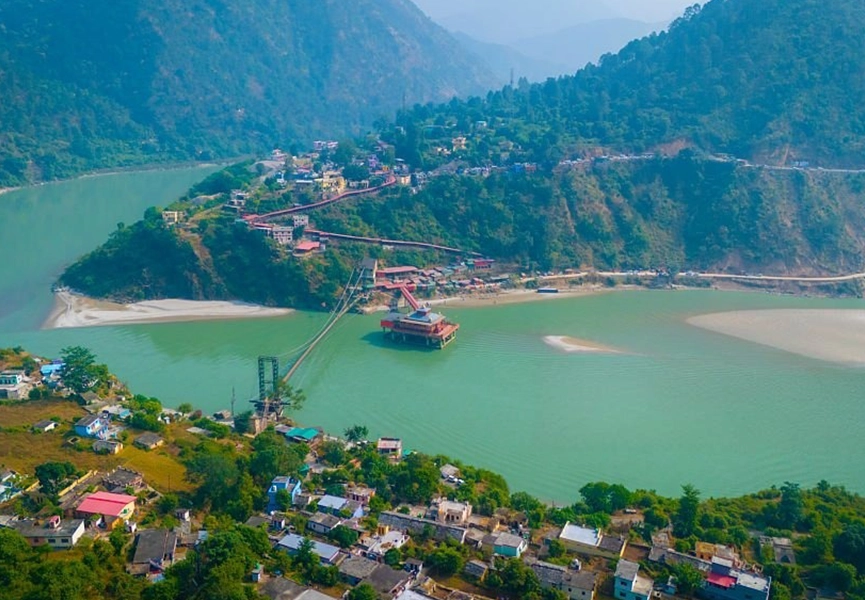
Located at the sacred confluence of the Alaknanda and Mandakini rivers, Rudraprayag is one of the five revered Panch Prayag of Uttarakhand. It is named after Lord Shiva in his Rudra form, and according to local tradition, this is where Sage Narada performed intense penance and was blessed by Lord Shiva with the knowledge of divine music.
For pilgrims travelling through Uttarakhand, Rudraprayag is much more than a town on the highway. It is the point where the route divides—one road follows the Mandakini Valley towards Kedarnath, while the other continues along the Alaknanda Valley towards Badrinath. Because of this unique location, almost every Char Dham pilgrim passes through Rudraprayag during the journey.
Why Rudraprayag is Important During Char Dham Yatra
Among all the towns on the Char Dham route, Rudraprayag holds a special place because it connects pilgrims to two of the most important shrines in Uttarakhand.
Travellers heading to Kedarnath leave the National Highway here and continue through Agastyamuni, Guptkashi, Sonprayag, and Gaurikund before beginning the trek to the temple. Those travelling to Badrinath continue along the Alaknanda Valley through Karnaprayag, Nandprayag, Joshimath, and finally Badrinath.
Many pilgrims stop at Rudraprayag to witness the Sangam, visit the ancient temples, enjoy a meal, or spend the night before continuing their journey. Its central location and excellent road connectivity make it one of the most practical halts on the Char Dham Yatra.
The Sacred Sangam of Alaknanda and Mandakini
The heart of Rudraprayag is its holy Sangam, where the Alaknanda River meets the Mandakini River flowing down from Kedarnath.
For centuries, devotees have regarded this confluence as a place of prayer and spiritual reflection. Standing at the Sangam, visitors can clearly observe the meeting of two Himalayan rivers before they continue together towards Devprayag, where the Ganga is ultimately formed after joining the Bhagirathi River.
Every evening, prayers and aarti at the Sangam create a peaceful atmosphere that attracts both pilgrims and visitors.
Shri Rudranath (Shiva) Temple and Jagdamba Temple
Close to the Sangam stand two important temples that have welcomed pilgrims for generations.
The ancient Shiva Temple, dedicated to Lord Shiva in his Rudra form, reflects the town’s deep spiritual heritage. Nearby, the Jagdamba Temple is devoted to Goddess Jagdamba and is visited by devotees seeking blessings before continuing towards Kedarnath and Badrinath.
According to local belief, Sage Narada meditated here to master music, and Lord Shiva appeared before him in his Rudra manifestation, giving the town its name.
Places to Visit Near Rudraprayag
Koteshwar Mahadev Temple
Located about 3 km from Rudraprayag, this ancient cave temple dedicated to Lord Shiva is one of the region’s most revered shrines. Local tradition says Lord Shiva meditated here on his way to Kedarnath.
Agastyamuni
A peaceful town on the banks of the Mandakini River, known for its temple dedicated to Sage Agastya and as an important stop on the Kedarnath route.
Kartik Swami Temple
Situated on a mountain ridge near Kanak Chauri, this temple dedicated to Lord Kartikeya offers breathtaking panoramic views of the Himalayan peaks after a short trek.
Dhari Devi Temple
Located between Srinagar and Rudraprayag on the banks of the Alaknanda River, Dhari Devi Temple is regarded as the guardian deity of Uttarakhand and is visited by many pilgrims during their Char Dham Yatra Trip Package.
Best Time to Visit Rudraprayag
Rudraprayag can be visited throughout the year, but the most pleasant months are from March to June and September to November.
During the Char Dham season, the town becomes an important transit point for pilgrims travelling towards Kedarnath and Badrinath. The monsoon months bring heavy rainfall, so travellers should check weather and road conditions before starting their journey.
Distance from Rudraprayag
| Destination | Approx. Distance | Travel Route |
|---|---|---|
| Haridwar | 165 km | Via Rishikesh & Devprayag |
| Rishikesh | 140 km | NH-7 |
| Devprayag | 67 km | Via Srinagar |
| Srinagar (Garhwal) | 34 km | NH-7 |
| Guptkashi | 47 km | Mandakini Valley Road |
| Sonprayag | 72 km | Via Guptkashi |
| Gaurikund | 77 km | Last Motorable Point for Kedarnath |
| Kedarnath Temple | 93 km | 77 km Road + 16 km Trek |
| Karnaprayag | 33 km | Towards Badrinath Route |
| Joshimath | 114 km | Via Karnaprayag & Chamoli |
| Badrinath | 160 km | Via Joshimath |
Hotels & Facilities
Rudraprayag offers a wide range of accommodation options, including budget hotels, deluxe stays, guest houses, and riverside properties. The town also has restaurants, cafés, pharmacies, fuel stations, ATMs, vehicle service centres, and local markets, making it one of the most convenient places to halt during the Char Dham Yatra.
Many pilgrims prefer spending a night here before continuing towards Kedarnath or Badrinath, especially when following a relaxed itinerary.
Planning Your Char Dham Journey
Rudraprayag is one of the most important milestones on the Char Dham route, connecting pilgrims with both the Mandakini Valley leading to Kedarnath and the Alaknanda Valley leading to Badrinath. A well-planned itinerary allows enough time to experience the Sangam, visit the ancient temples, and continue the pilgrimage comfortably without rushing.
If you’re planning to visit all four sacred shrines, explore our complete Char Dham pilgrimage with comfortable facilities like hotels, private transport, and a thoughtfully planned day-wise itinerary for a smooth and well-organised journey.