Kedarnath Travel Guide • Uttarakhand • Spiritual Journey
The Spiritual Heart of Kedarnath
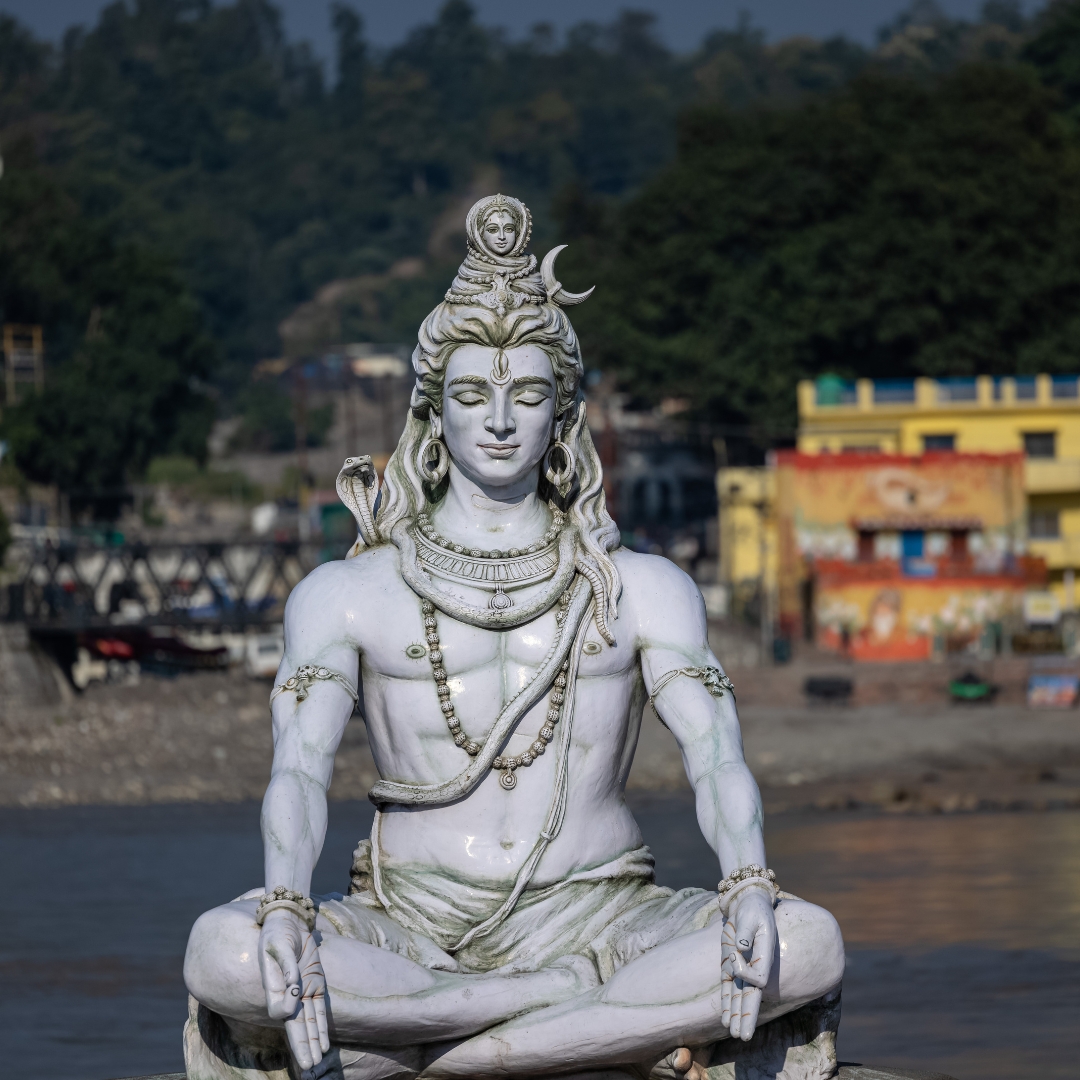
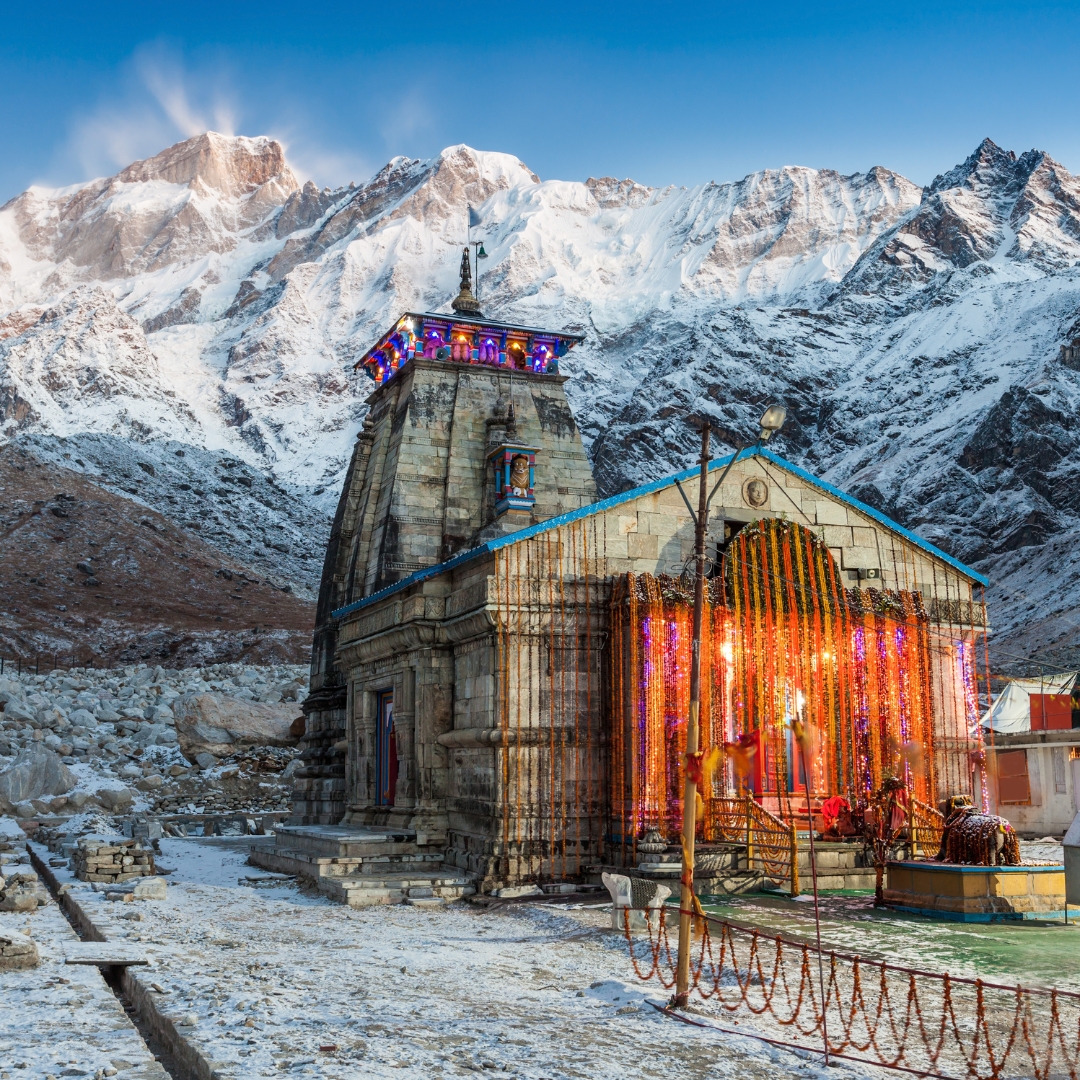
Kedarnath is much more than a temple surrounded by the high Himalayas. It is a pilgrimage shaped by faith, history, mythology, mountain landscapes and the journey itself.
Kedarnath at a Glance
- Location: Rudraprayag district, Uttarakhand
- Altitude: Approximately 3,580 metres
- Religious importance: Jyotirlinga and one of Uttarakhand’s Char Dham shrines
- Road journey: The pilgrimage route continues from Gaurikund toward Kedarnath
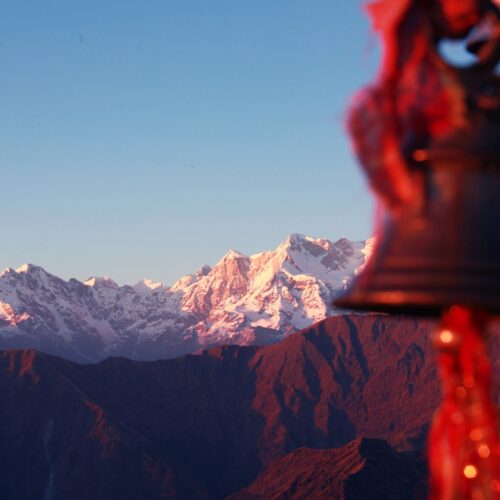
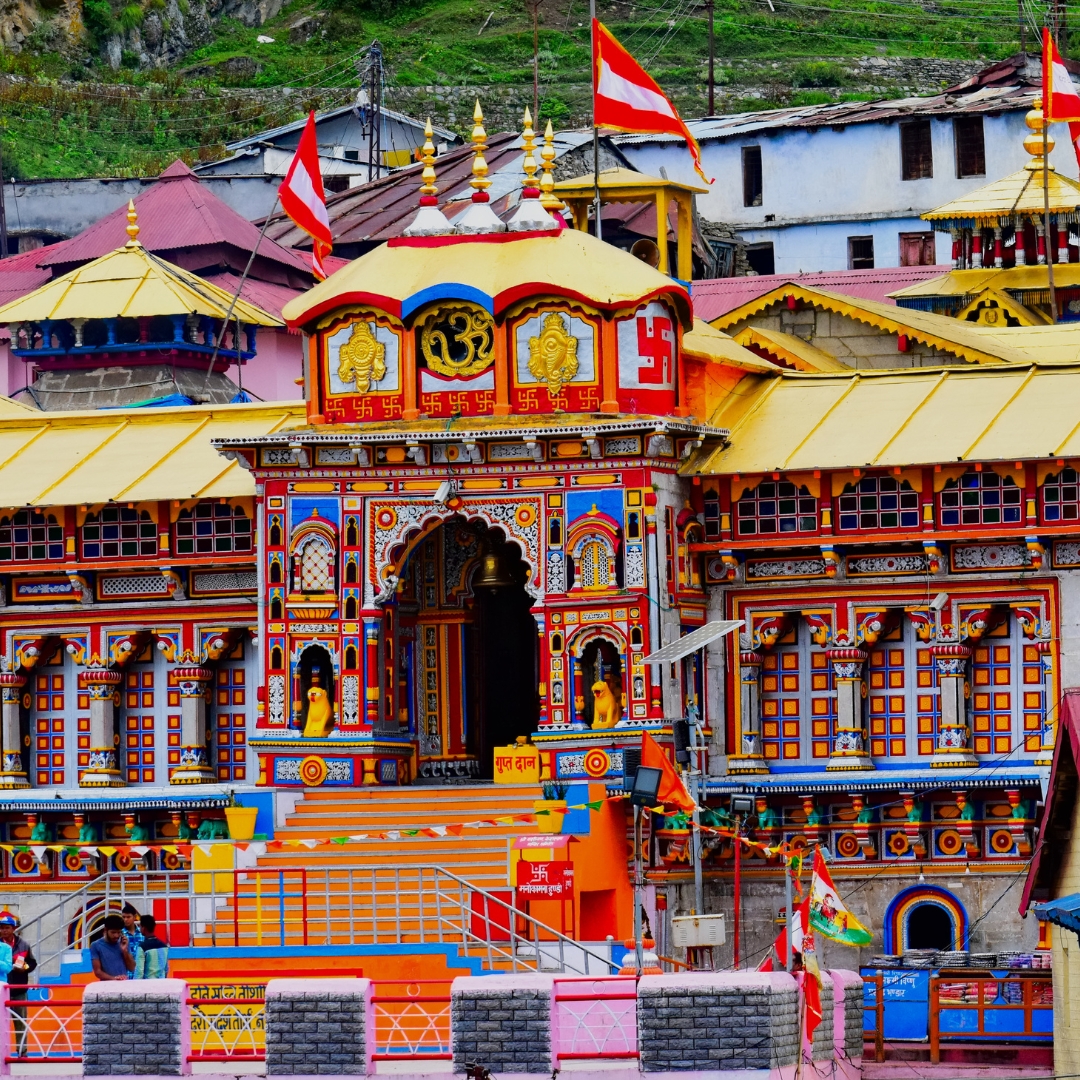
Kedarnath is much more than a temple surrounded by the high Himalayas. For centuries, this remote valley has been one of the most important pilgrimage destinations for devotees of Lord Shiva. Located in the Rudraprayag district of Uttarakhand at an altitude of about 3,580 metres above sea level, Kedarnath is one of the twelve Jyotirlingas of Lord Shiva and one of the four sacred shrines of Uttarakhand’s Char Dham Yatra, along with Badrinath, Gangotri and Yamunotri. The region is also one of the five Panch Kedar shrines associated with Lord Shiva.
For pilgrims, the journey to Kedarnath is as important as the darshan itself. The traditional route begins at Gaurikund, from where pilgrims undertake the mountain journey to Kedarnath. The present pilgrimage route is commonly described as approximately 16 km, although the exact walking distance can vary with route and current trail arrangements. The journey through the Mandakini valley, surrounded by towering Himalayan peaks, makes Kedarnath one of the most distinctive pilgrimage experiences in Uttarakhand.
1. Kedarnath Temple – The Sacred Abode of Lord Shiva
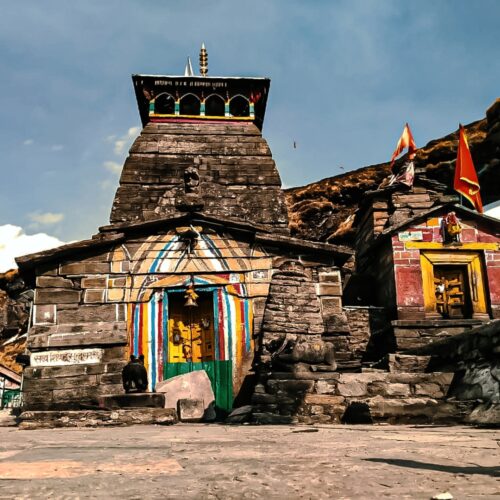
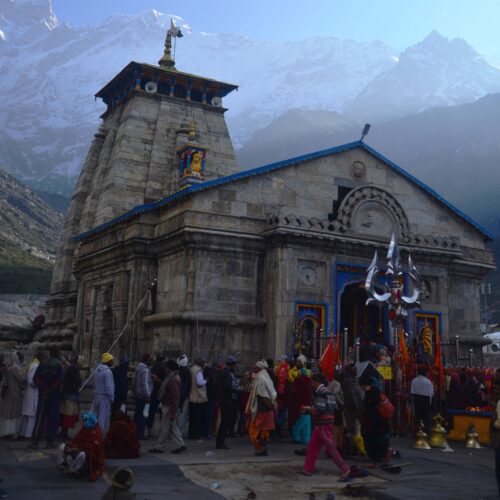
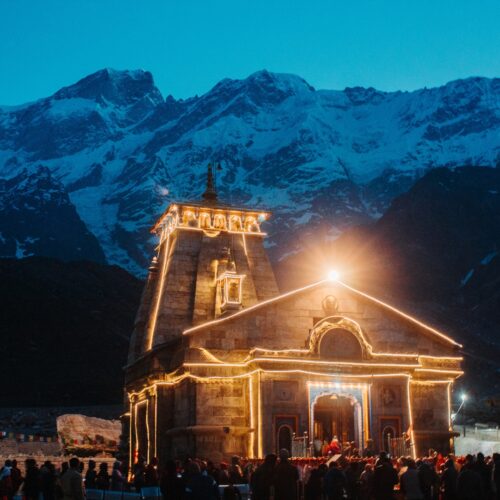
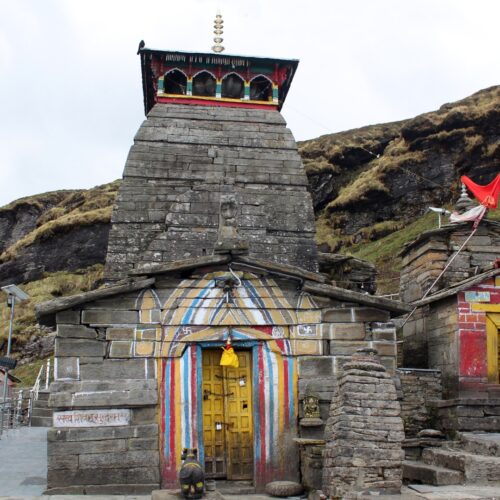
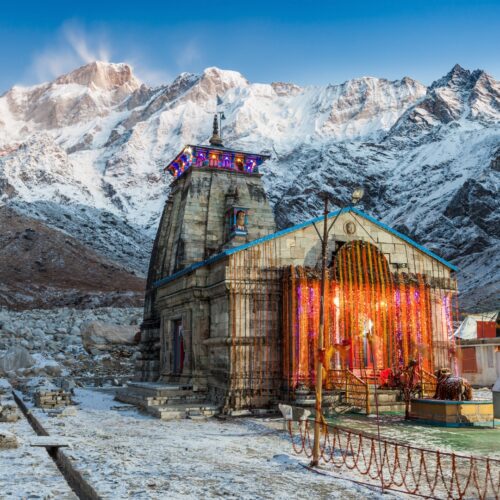
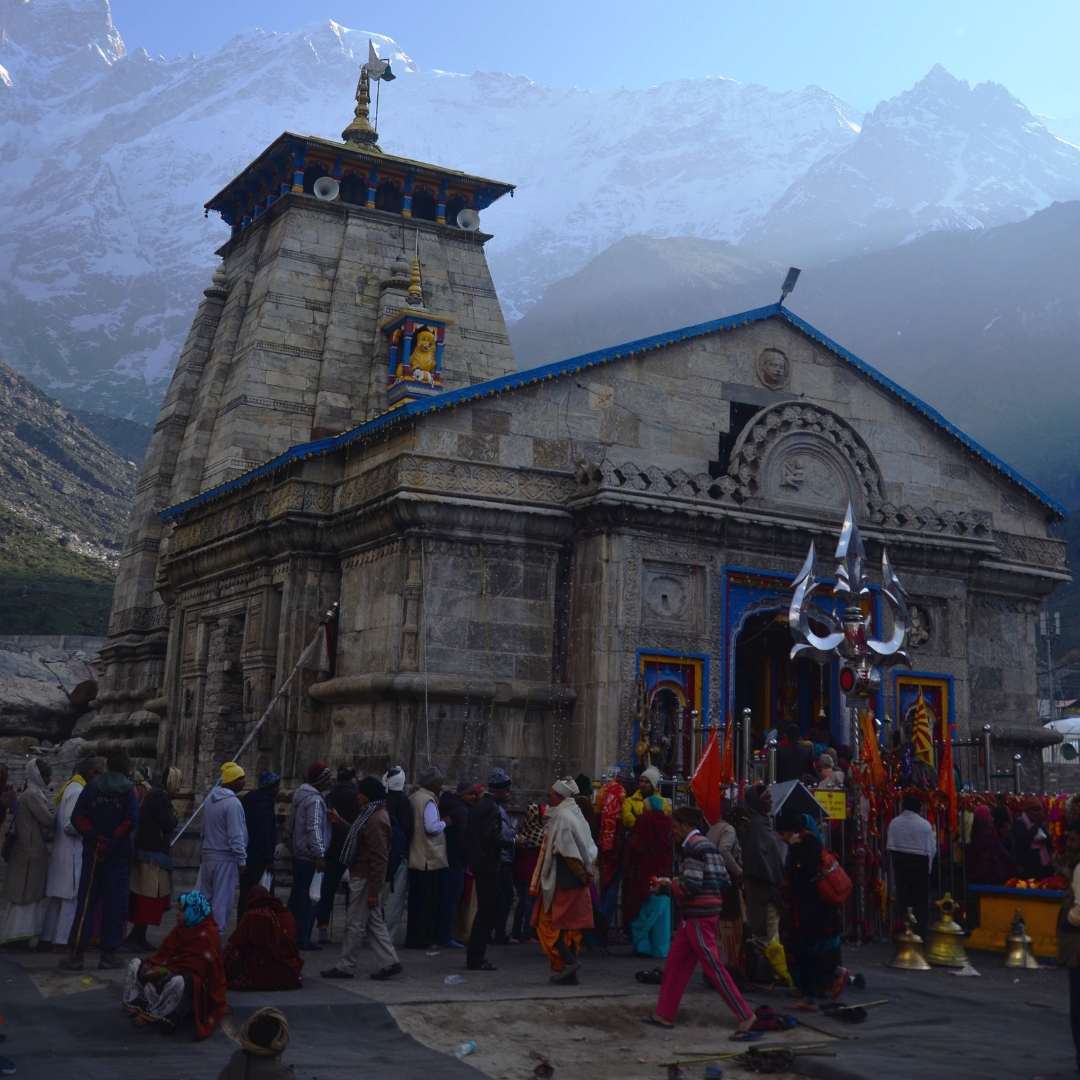
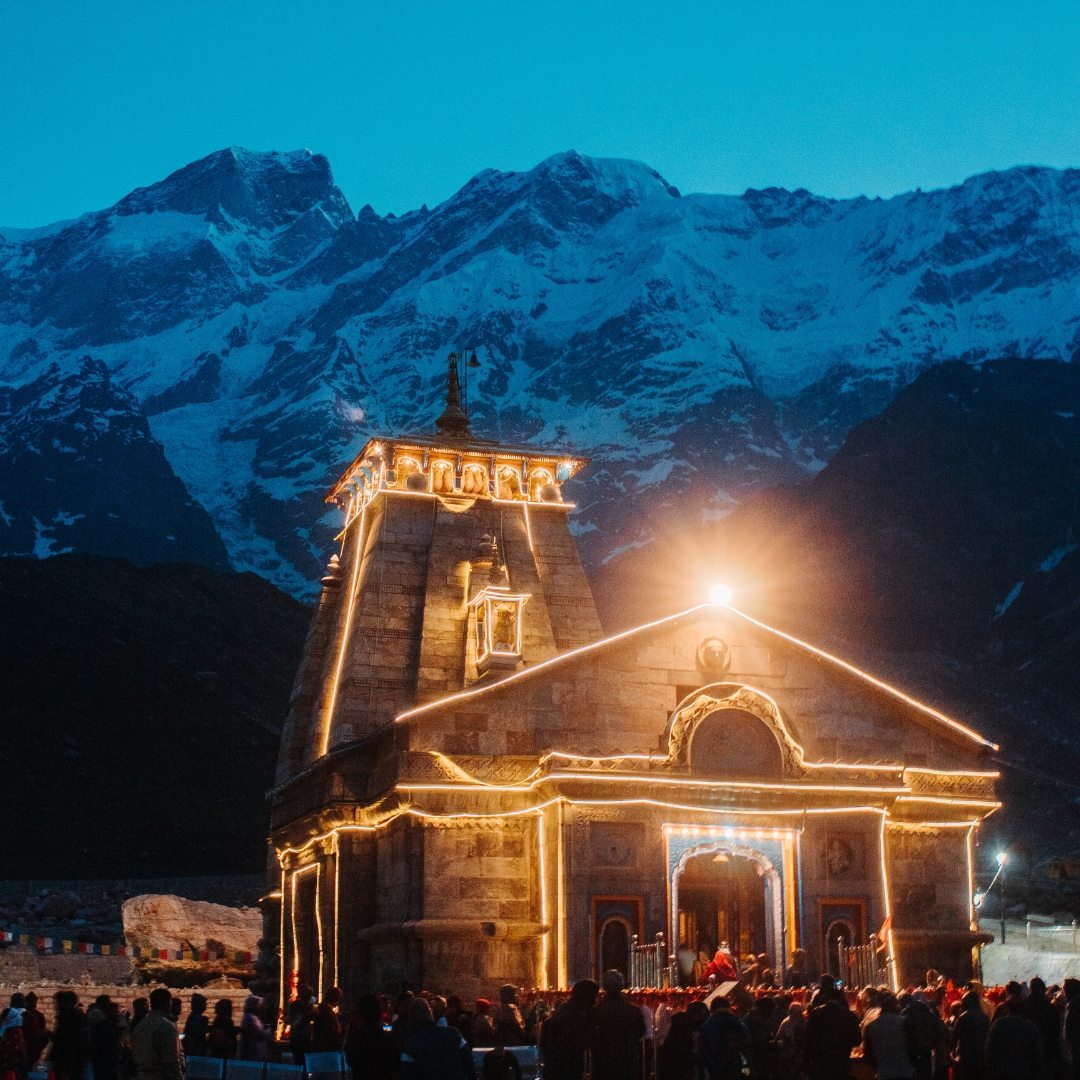
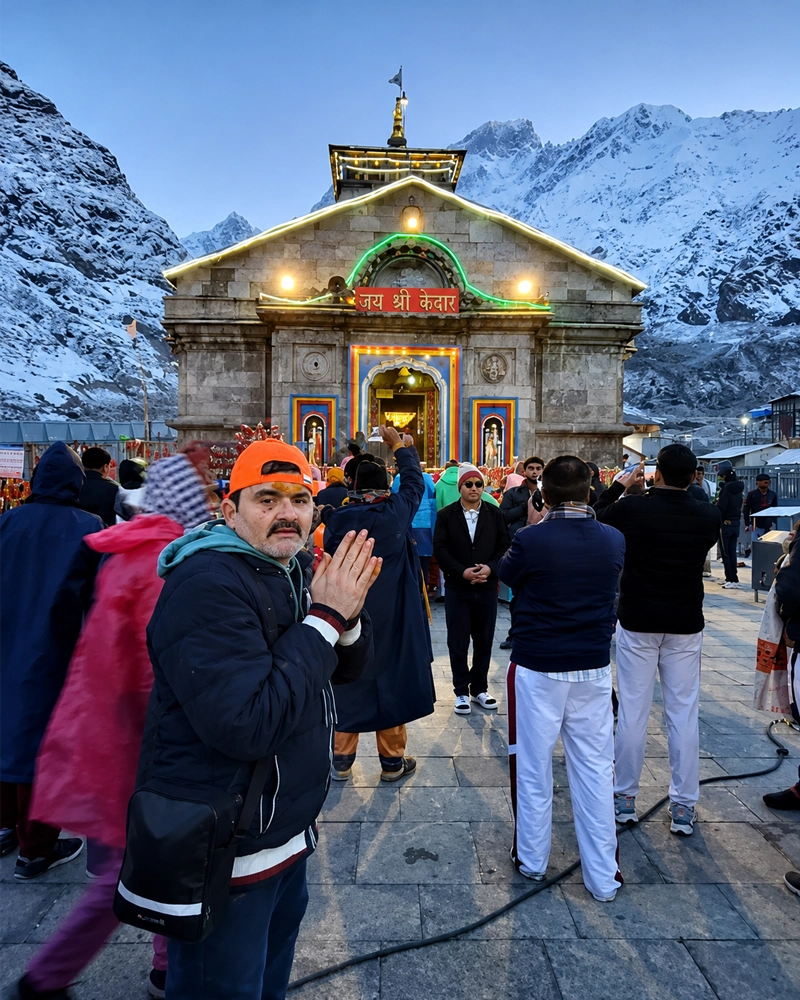
At the centre of the entire Kedarnath pilgrimage stands the ancient Kedarnath Temple, dedicated to Lord Shiva. The temple is built from enormous, carefully cut stone slabs and stands on a broad platform against the dramatic backdrop of the Kedarnath range. Inside the sanctum, a naturally shaped conical stone is worshipped as the Sadashiva form of Lord Shiva. A large Nandi statue stands outside the temple facing the shrine.
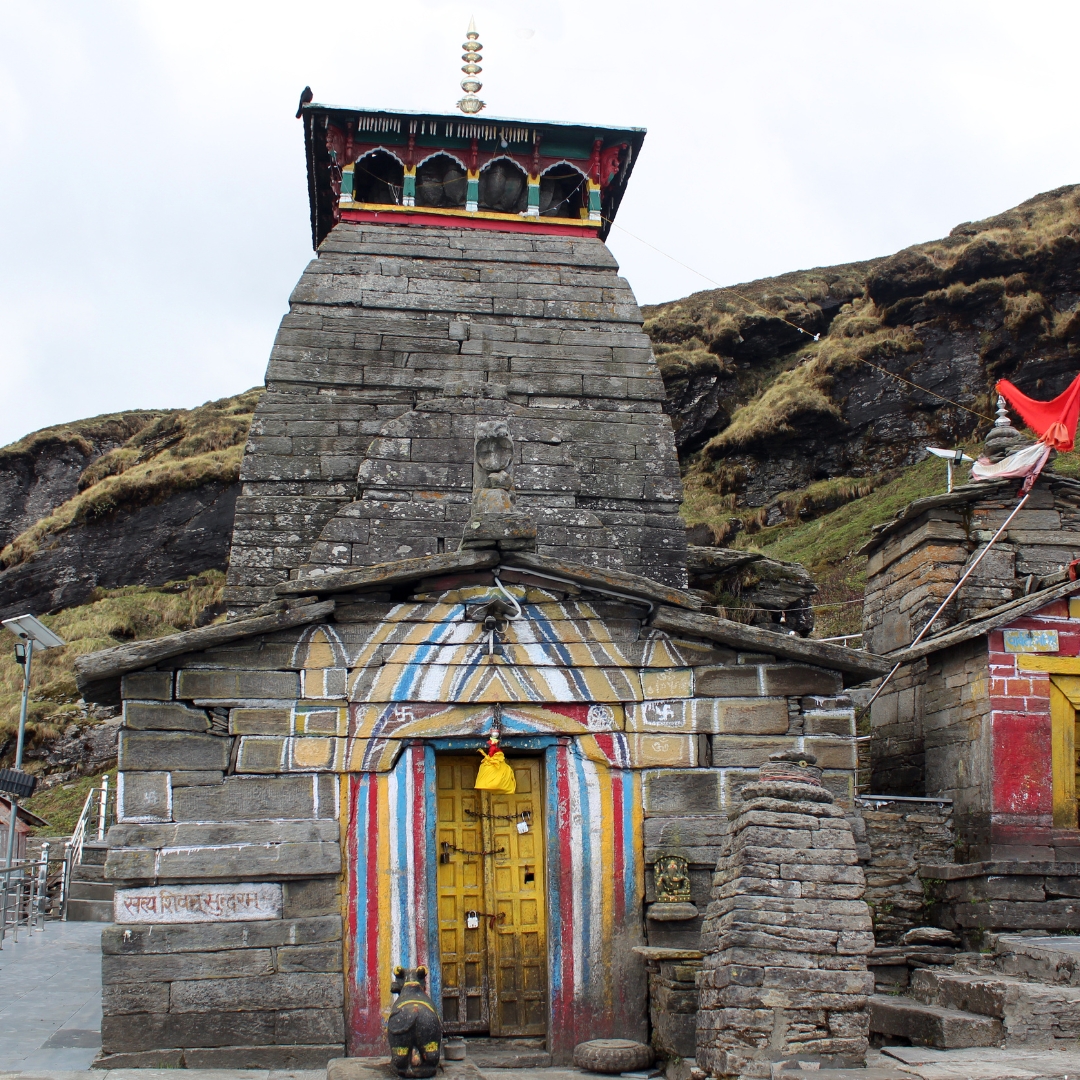
The religious importance of Kedarnath goes far beyond its magnificent setting. According to Hindu tradition, the story of Kedarnath is connected with the Mahabharata. It is believed that after the Kurukshetra war, the Pandavas sought Lord Shiva’s blessings to atone for the destruction caused during the battle. Shiva is said to have taken the form of a bull and attempted to escape from them. When the Pandavas recognised him, he disappeared into the earth, leaving his hump behind at Kedarnath. The other parts of the divine form are traditionally associated with Tungnath, Rudranath, Madhyamaheshwar and Kalpeshwar, together forming the Panch Kedar.
The present stone temple is traditionally associated with Adi Shankaracharya, and the official temple committee describes it as an ancient shrine that was built or substantially established in the 8th century, while also noting the presence of an earlier temple tradition associated with the Pandavas. Because the historical and religious traditions surrounding Kedarnath span different periods, it is more accurate to describe the shrine as an ancient temple with layers of history and tradition, rather than assigning its entire origin to a single person or date.
Kedarnath’s importance is also linked to its status as a Jyotirlinga. In Hindu tradition, the twelve Jyotirlingas represent sacred manifestations of Lord Shiva, and Kedarnath is regarded as one of these highly revered shrines. This is one of the main reasons devotees travel from different parts of India to undertake the difficult Himalayan pilgrimage.
The temple that survived centuries of harsh Himalayan conditions
One of the most fascinating aspects of Kedarnath Temple is its ability to withstand extreme natural conditions. The shrine stands in an area that receives heavy snowfall during winter and remains inaccessible for several months each year.
Some historical research reported on the region has suggested that the temple may have remained buried beneath or surrounded by glacial ice for several centuries, with estimates of around 400 years between approximately the mid-14th century and the 18th century. This should be understood as a research-based interpretation of the region’s glacial history rather than a universally established date for the temple itself.
The temple’s resilience became especially visible during the devastating June 2013 Kedarnath disaster. Massive floods and debris devastated much of the surrounding settlement, while the main temple structure survived with comparatively limited structural damage. Government conservation records subsequently document restoration and conservation work carried out around the shrine.
This combination of faith, architecture, history and the extraordinary Himalayan landscape is what makes a visit to Kedarnath so different from an ordinary temple visit.
When does Kedarnath Temple open?
The Kedarnath Temple follows a seasonal pilgrimage cycle because of the extreme winter conditions at this altitude. Its portals generally open in April or May and close around October or November, with the exact dates determined according to traditional religious calculations.
An important part of the tradition is that the Kedarnath opening date is announced on the occasion of Maha Shivratri, following calculations based on the Hindu Panchang at the temple’s winter seat, Omkareshwar Temple in Ukhimath. The temple traditionally closes on Bhai Dooj, after which the worship of Lord Kedarnath continues at the winter seat in Ukhimath for the winter months.
For example, in 2026, the Kedarnath Temple portals opened on 22 April at 8:00 AM. The exact date changes every year, so pilgrims planning their yatra should always check the latest announcement from the Badrinath-Kedarnath Temple Committee before travelling.
If you are planning to visit Kedarnath as part of a larger pilgrimage covering Badrinath, Gangotri and Yamunotri, you can also explore our Char Dham Tour Packages for a complete route, stay, transportation and yatra plan.
For travellers who want to visit only Kedarnath, our Kedarnath Tour Package can be a more focused option.
2. Bhairavnath Temple – The Guardian of Kedarnath Dham
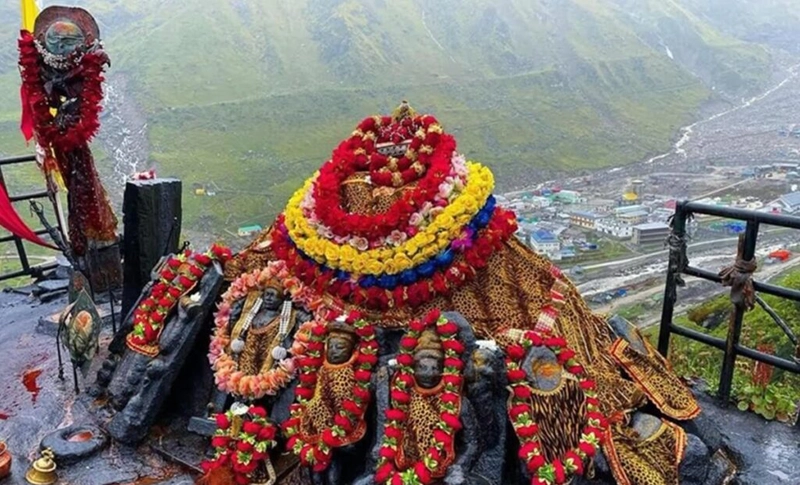
A short uphill walk from the main Kedarnath Temple takes pilgrims to Bhairavnath Temple, located approximately 500 metres from Kedarnath Temple. Situated on the hillside above the main shrine, the temple offers a remarkable view over the Kedarnath valley and the surrounding Himalayan landscape.
The temple is dedicated to Lord Bhairavnath, traditionally regarded as a fierce manifestation of Lord Shiva. In local religious tradition, Bhairavnath is considered the guardian or Kshetrapal of Kedarnath Dham.
There is a particularly interesting connection between Bhairavnath and the seasonal life of Kedarnath. During the winter months, when the main Kedarnath Temple is closed because of heavy snowfall and the worship of Lord Kedarnath continues at Ukhimath, devotees believe that Bhairavnath protects the sacred region. Uttarakhand Tourism specifically identifies Bhairavnath as the guardian of Kedarnath and notes this traditional belief about his protection of the shrine and town during winter.
The opening rituals of Bhairavnath are also closely associated with the beginning of the Kedarnath pilgrimage season. In recent years, worship of Bhairavnath has formed an important part of the ceremonies leading up to the reopening of Kedarnath, while daily rituals at Kedarnath begin after the Bhairavnath shrine’s portals are opened.
For pilgrims staying in Kedarnath, visiting Bhairavnath Temple is therefore not simply an additional sightseeing stop. It adds another layer to understanding the religious traditions surrounding Kedarnath Dham.
The location is also one of the best viewpoints around the settlement. From the temple area, visitors can look back toward the Kedarnath Temple complex and see the surrounding valley framed by the high Himalayan mountains. Many pilgrims stop here for photographs after completing their darshan, although the short uphill walk should still be taken carefully because of the high altitude.
3. Adi Shankaracharya Samadhi – A Place of Spiritual Legacy
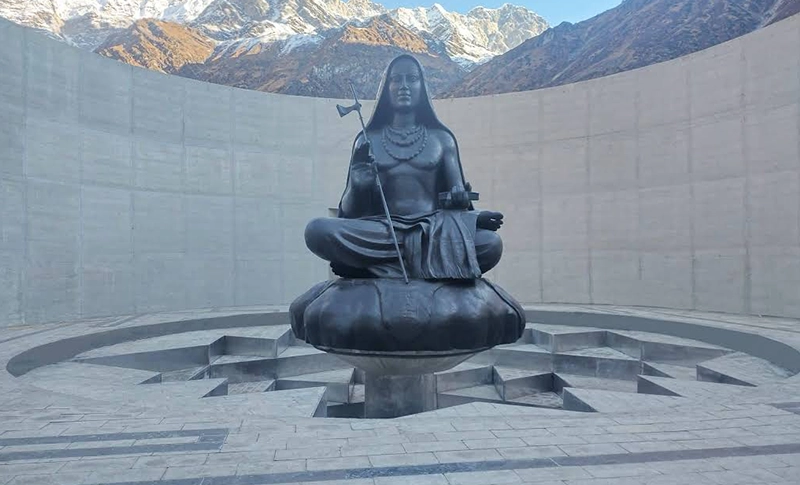
Just behind the Kedarnath Temple stands the Adi Shankaracharya Samadhi, a site associated with one of the most influential philosophers and spiritual teachers in Hinduism.
Adi Shankaracharya is traditionally credited with travelling extensively across India to revive and organise important Hindu pilgrimage and philosophical traditions. He is also associated with the establishment of four major spiritual centres, or Mathas, in different parts of India. His connection with Kedarnath is particularly important because tradition holds that he revitalised the Kedarnath shrine and attained Moksha here at a young age.
The Samadhi is located only a short distance behind the main Kedarnath Temple, making it one of the easiest important spiritual sites to visit while in Kedarnath. Its location also gives the pilgrimage a deeper historical dimension: visitors are not only visiting an ancient Shiva shrine but also a place associated with the wider spiritual traditions that helped shape Hindu pilgrimage in India.
According to the traditional account, Adi Shankaracharya came to Kedarnath in the 8th century and played an important role in revitalising the shrine. The Ministry of Tourism’s Incredible India portal describes the Samadhi as the place where he is believed to have attained final liberation.
For many pilgrims, a visit to Kedarnath feels incomplete without spending a few quiet moments at the Samadhi. After the long journey from Gaurikund and the darshan at the main temple, this small area behind the shrine offers a peaceful place to reflect on the spiritual history of Kedarnath.
Together, Kedarnath Temple, Bhairavnath Temple and Adi Shankaracharya Samadhi form the spiritual core of the Kedarnath pilgrimage. They show three different dimensions of the destination: the devotion to Lord Shiva, the traditional protection of the sacred Dham, and the philosophical legacy associated with Adi Shankaracharya.
Sacred Trails and Natural Places Around Kedarnath
The spiritual experience of Kedarnath does not end at the main temple. Once pilgrims move beyond the temple complex, the landscape changes from the crowded pilgrimage centre to quiet mountain trails, rivers, waterfalls, high-altitude lakes and glacial terrain.
Some of these places are closely connected with the religious traditions of Kedarnath, while others reveal the raw Himalayan landscape surrounding the Dham. Garud Chatti, Chorabari Tal and the Chorabari Glacier are particularly important because they help visitors understand the geography, spirituality and difficult natural environment in which Kedarnath has existed for centuries.
4. Garud Chatti and Baba Barfani Ashram – A Quiet Spiritual Trail
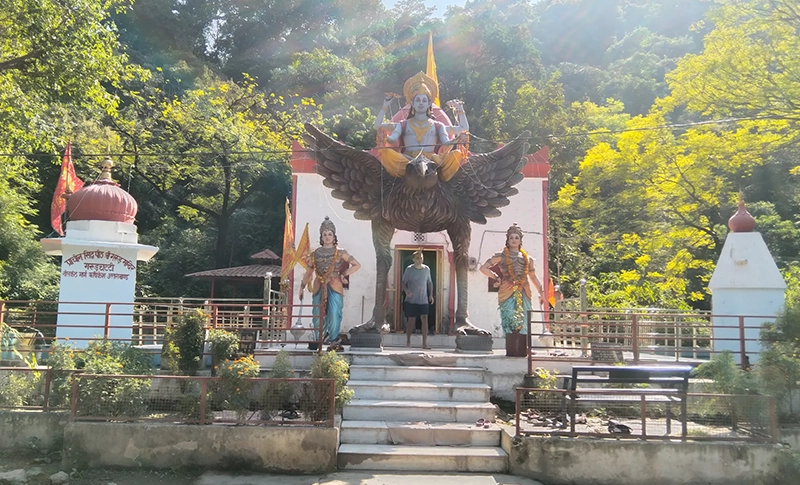
Garud Chatti is one of the notable points on the traditional Kedarnath trekking route. It lies in the upper Mandakini valley between the lower sections of the pilgrimage trail and Kedarnath. The area is surrounded by steep Himalayan slopes, mountain streams and high-altitude terrain, giving it a very different atmosphere from the busy temple market around Kedarnath.
The name Garud Chatti is associated with the traditional name of the area, while Chatti in the Himalayan pilgrimage routes generally refers to a resting place or halt along the journey. For generations, such stopping points have been important to pilgrims travelling on foot toward Kedarnath.
The Garud Chatti area is also known for its association with sadhus, yogis and spiritual seekers. The remote surroundings and long winter isolation have made this part of the Kedarnath valley attractive to people following a life of meditation and spiritual practice. During the pilgrimage season, visitors may encounter small ashrams, shelters and places associated with saints along the wider Kedarnath route.
One such place that has become known among pilgrims is Baba Barfani Ashram, associated with Lalit Maharaj, popularly known as Baba Barfani. Accounts associated with the ashram describe Lalit Maharaj as a yogi devoted to the worship and spiritual practice of Lord Kedarnath. The ashram is also known for providing food and shelter to visiting pilgrims and sadhus when arrangements are possible.
For travellers, the importance of such places is not necessarily about sightseeing in the conventional sense. They offer a glimpse into another side of Kedarnath — the tradition of people who come to the Himalayas not simply for a few hours of darshan, but to spend extended periods in prayer, meditation and spiritual practice.
The winter side of Garud Chatti
The character of Garud Chatti changes dramatically outside the pilgrimage season. Kedarnath and the surrounding high-altitude areas receive heavy snowfall during winter, and the main shrine remains closed for several months. The region becomes extremely difficult to access, and normal tourist movement is not comparable to the summer pilgrimage season.
This is one reason why stories of Himalayan sadhus continuing their spiritual practices in and around Kedarnath during severe winter conditions have become an important part of the local spiritual culture. Such accounts should be understood as individual practices rather than as an indication that ordinary pilgrims can safely access the area during winter.
Garud Chatti has also become part of the modern infrastructure around Kedarnath. The Government of India inaugurated a Garud Chatti bridge over the Mandakini River as part of the Kedarnath redevelopment works in 2021.
For pilgrims walking toward Kedarnath, Garud Chatti is therefore more than just another point on the trail. It represents the meeting point of the old pilgrimage route, Himalayan nature and the continuing tradition of spiritual life in the Kedarnath valley.
Travel note: The route around Garud Chatti can change because of construction, weather, landslides and safety restrictions. Pilgrims should always follow the officially designated trekking route and current instructions from the local administration.
5. Chorabari Tal – The Sacred Lake Also Known as Gandhi Sarovar
Among the most fascinating places that can be visited from Kedarnath is Chorabari Tal, popularly known as Gandhi Sarovar.
The lake lies upstream from Kedarnath near the foot of the surrounding high Himalayan peaks and at the mouth of the Chorabari Bamak Glacier. Government sources place it at approximately 4 kilometres upstream of Kedarnath, while the exact walking distance can vary depending on the route and current trail conditions.
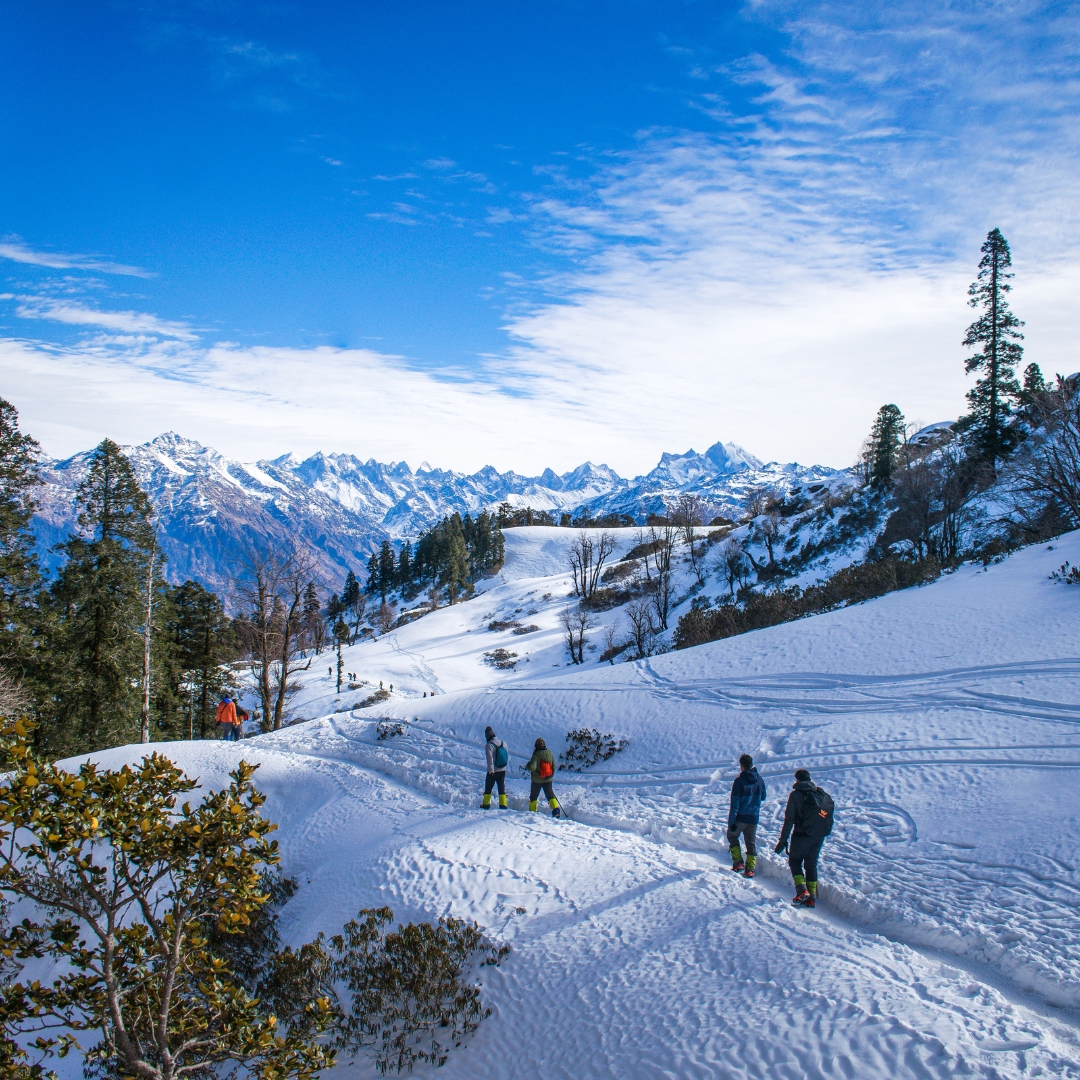
The journey to Chorabari Tal is not an ordinary sightseeing walk. It is a high-altitude trek through rugged mountain terrain. The trail passes through the upper Kedarnath landscape, with views of rocky slopes, snow-covered peaks, streams and the Mandakini valley.
The lake is also known as Gandhi Sarovar because some of Mahatma Gandhi’s ashes were immersed here in 1948. This historical connection gave the lake the name by which many visitors know it today. Uttarakhand Tourism also identifies Chorabari Lake as Gandhi Sarovar and notes its location at the mouth of the Chorabari Bamak Glacier.
A lake surrounded by spiritual traditions
Kedarnath has long been associated with meditation and spiritual practice, and the wider Himalayan landscape around the Dham has many local traditions connected with sages and ascetics.
Stories associated with Chorabari Tal and the surrounding mountains describe the area as a place suitable for meditation and yogic practice. However, these traditional accounts should be distinguished from historically documented facts. The broader religious importance of the Kedarnath region is well established, while individual legends about specific sages or episodes at the lake belong to the oral and spiritual traditions of the area.
This combination of spirituality and untouched Himalayan scenery is what makes the walk toward Chorabari Tal particularly memorable.
The 2013 Kedarnath disaster
Chorabari Tal also occupies an important place in the modern history of Kedarnath because of the catastrophic events of June 2013.
During 15–17 June 2013, the Kedarnath region experienced exceptionally heavy rainfall accompanied by rapid snowmelt and other extreme conditions. The water level in Chorabari Tal rose dramatically, and the natural lake subsequently breached on 17 June 2013, sending a destructive surge of water and debris downstream toward Kedarnath. Scientific studies have documented the role of the lake breach in the second major flood wave that devastated the Kedarnath settlement.
It is important to describe this accurately: the 2013 disaster was not simply the result of one isolated “cloudburst at the glacier.” It was the result of a combination of extreme rainfall, snowmelt, landslides, changing river channels and the breaching of Chorabari Tal, which dramatically increased the flow of water and debris through the valley.
The event permanently changed the landscape around Kedarnath. Even today, the journey toward Chorabari Tal gives visitors a chance to understand how closely the pilgrimage town is connected with the surrounding glacial environment.
How far is Chorabari Tal from Kedarnath?
Chorabari Tal is generally described as being around 4 km from Kedarnath. However, this should be treated as an approximate trekking distance rather than a road distance. There is no motorable road to the lake, and the journey involves walking at high altitude.
Because weather can change very quickly in this region, travellers should not treat the trek as a casual afternoon walk. Conditions on the trail, snowfall, rainfall, rockfall and local restrictions can affect whether the route is accessible.
For visitors interested in trekking around Kedarnath, this is also a good point to understand that Kedarnath is not only a temple destination but also a high-altitude Himalayan trekking region.
6. Chorabari Glacier – The Frozen Landscape Above Kedarnath
Beyond Chorabari Tal lies the Chorabari Glacier, also known as Chorabari Bamak Glacier. It is one of the important glacial features of the Kedarnath region and plays a significant role in the geography of the Mandakini valley.
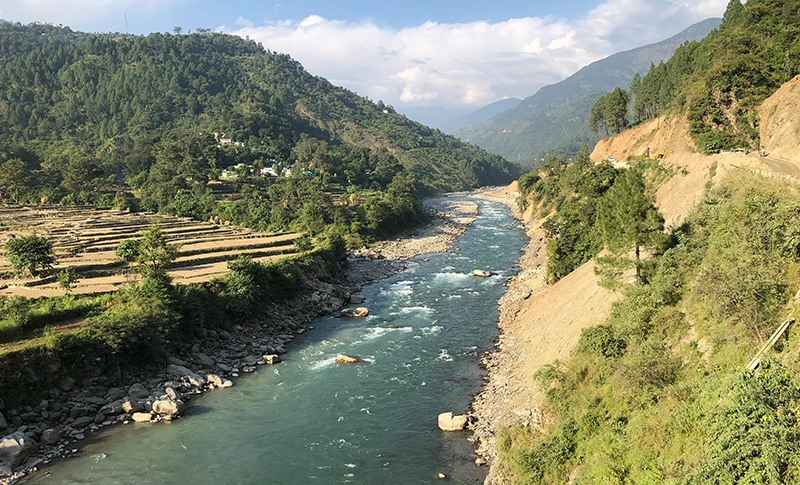
Uttarakhand Tourism identifies Chorabari Glacier as being near Kedarnath and describes it as the source region of the Mandakini River. Government information also records that the Mandakini originates from the Chorabari Glacier and that one of the glacier’s snouts terminates at Chorabari Tal.
This makes the relationship between the three places particularly interesting:
Chorabari Glacier → Chorabari Tal / Gandhi Sarovar → Mandakini River → Kedarnath Valley
The glacier and the lake are therefore not isolated attractions. They form part of the natural system that shapes the entire landscape around Kedarnath.
The source of the Mandakini
The Mandakini River is one of the most important rivers of the Garhwal Himalayas. Its upper catchment begins in the glaciated landscape around Kedarnath, with the Chorabari Glacier playing an important role in the river’s headwaters.
Standing in the Kedarnath valley, it is easy to think of the Mandakini simply as the river flowing beside the pilgrimage route. But its origin in this high Himalayan environment shows how closely the religious landscape of Kedarnath is connected with the natural geography of the mountains.
The same river that flows through the Kedarnath valley eventually travels downstream through the Rudraprayag region, where it joins the Alaknanda River.
Why Chorabari Glacier is different from a normal tourist attraction
Unlike Kedarnath Temple or Bhairavnath Temple, Chorabari Glacier should not be considered a regular sightseeing destination.
A glacier is a dynamic natural environment. Crevasses, unstable ice, rockfall, sudden weather changes, snow accumulation and other hazards can make movement in glaciated terrain dangerous. Conditions can also change significantly from one season to another.
For ordinary pilgrims visiting Kedarnath, the safer and more practical experience is to appreciate the glacier and surrounding peaks from permitted viewpoints and established trekking areas rather than attempting to approach the glacier independently.
Access beyond designated routes should only be undertaken with appropriate local guidance, equipment and permission where required.
The glacier and the memory of 2013
The Chorabari Glacier is also inseparable from the environmental story of the 2013 Kedarnath disaster. The extreme rainfall and rapid snowmelt affected the glacier and its surrounding catchment, while the breach of the moraine-dammed Chorabari Lake produced one of the major destructive flood waves that struck Kedarnath on 17 June.
Research carried out after the disaster also documented major changes to the terrain around the glacier, lake and Kedarnath valley. The event demonstrated how quickly a high-altitude Himalayan landscape can change when extreme rainfall interacts with snow, ice, unstable slopes and natural water bodies.
Today, Chorabari Glacier remains an important part of Kedarnath’s natural identity. It represents the immense Himalayan environment surrounding the shrine — a landscape of snow, rock, ice, rivers and high mountain peaks that has shaped the pilgrimage for generations.
Experiencing Kedarnath Beyond the Temple
Garud Chatti, Baba Barfani Ashram, Chorabari Tal and Chorabari Glacier show a different side of Kedarnath. The pilgrimage is not limited to reaching the temple and returning; the surrounding valley contains a remarkable combination of spiritual traditions, Himalayan trails, high-altitude lakes, glaciers and stories connected with the region’s history.
For travellers planning a longer Himalayan pilgrimage, these places can be considered while preparing the Kedarnath portion of the journey. However, every trek beyond the main temple area should be planned according to current weather, trail conditions, local permissions and official safety instructions.
Kedarnath is one of the four sacred destinations of Uttarakhand’s Char Dham Yatra, and many pilgrims combine their visit to Kedarnath with Badrinath as part of a Do Dham Yatra. Those planning to cover all four sacred shrines can explore our Char Dham Tour Packages for the complete pilgrimage route, while travellers focusing specifically on Kedarnath can consider our Kedarnath Tour Package.
High-Altitude Journey Beyond the Main Kedarnath Area
The landscape around Kedarnath becomes even more dramatic once you leave the main temple area and begin climbing towards the higher Himalayan lakes.
Among the most remarkable destinations in this region is Vasuki Tal, a high-altitude lake surrounded by some of the most impressive mountain scenery in the Kedarnath valley. Unlike the relatively short walks around the temple, reaching Vasuki Tal requires a proper mountain trek and is best suited to travellers who are comfortable walking for several hours at high altitude.
7. Vasuki Tal – A High-Altitude Lake Above Kedarnath
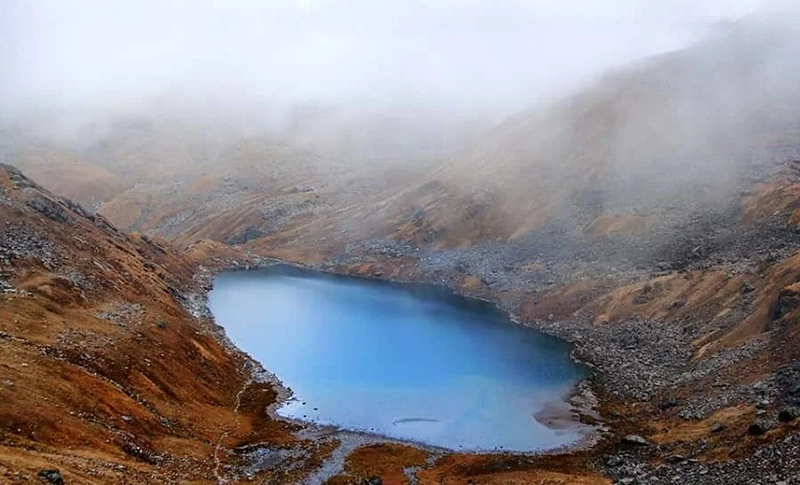
Located approximately 8 km from Kedarnath, Vasuki Tal sits at an altitude of around 4,135 metres (14,000 + feet) above sea level. The lake is surrounded by high Himalayan mountains and offers spectacular views towards the Chaukhamba peaks and the Mandakini valley. Uttarakhand Tourism describes the route from Kedarnath as a continuous ascent and classifies the wider Kedarnath–Vasuki Tal trek as moderate to challenging.
This is one of the reasons Vasuki Tal should not be compared with an ordinary sightseeing spot near Kedarnath. The distance may appear short on a map, but at more than 4,000 metres above sea level, every kilometre feels different. The trail climbs continuously, the air becomes thinner and weather conditions can change quickly.
For an experienced trekker, however, the effort is rewarded by an extraordinary Himalayan landscape.
The lake appears between barren rocky slopes and high mountain ranges, with the surrounding peaks reflected in its clear waters when conditions are calm. During the warmer months, the landscape around the lake can also display alpine vegetation and seasonal Himalayan flowers. Brahma Kamal, the iconic high-altitude flower associated with Uttarakhand, can be seen in suitable areas during its flowering season, although visitors should never pick or damage wild plants.
Why is it called Vasuki Tal?
The name Vasuki Tal is traditionally associated with Vasuki, the serpent king of Hindu mythology who is closely connected with Lord Shiva.
Uttarakhand Tourism records the local tradition that the lake takes its name from its shape, which is said to resemble the serpent king Vasuki wrapped around Lord Shiva’s neck. Another important religious tradition associated with the lake comes from Hindu mythology: Vasuki Tal is believed to be a place where Lord Vishnu bathed on the occasion of Raksha Bandhan.
These traditions add another layer to a landscape that might otherwise appear purely natural. Like many places around Kedarnath, the lake exists at the intersection of Himalayan geography and Hindu spiritual tradition.
The trek from Kedarnath to Vasuki Tal
The commonly described trekking distance from Kedarnath to Vasuki Tal is approximately 8 km one way. Uttarakhand Tourism’s official trek itinerary describes it as a continuous ascent from Kedarnath, with views of the Chaukhamba peaks and Mandakini valley along the way. The same itinerary describes Vasuki Tal as a large, clear-water lake surrounded by high Himalayan terrain.
The trail is considerably more demanding than the main Kedarnath pilgrimage route because of the altitude and sustained climb.
A typical journey involves:
Kedarnath → continuous uphill trail → high Himalayan terrain → Vasuki Tal → return to Kedarnath
For trekkers attempting the route as a day excursion, an early start is important because daylight, weather and trail conditions can change quickly in the mountains.
The route may also pass through glacial and rocky terrain, and the exact condition of the trail can vary from season to season. Snow, rain, fog or loose rocks can make sections considerably more difficult than they appear under clear-weather conditions.
Why the trek is associated with Brahma Kamal
The upper Kedarnath region is famous for its alpine flora, including Brahma Kamal, a highly revered Himalayan flower.
The flower has deep religious importance in Uttarakhand and is traditionally associated with Lord Brahma. During the monsoon flowering season, Brahma Kamal can be found in suitable high-altitude habitats across parts of the Himalayan region.
There is also a long-standing local tradition of pilgrims and ascetics offering Brahma Kamal at temples. Around the Kedarnath region, sadhus and devotees may collect flowers as part of religious offerings, but visitors should not pick wild Brahma Kamal themselves. High-altitude plants are fragile, and responsible travellers should admire them without damaging the habitat.
The connection between the flower and Kedarnath is one reason the higher Himalayan trails around the Dham hold particular significance for spiritual travellers.
Is Vasuki Tal suitable for everyone?
No. This is one of the most important things to understand before planning the trek.
At approximately 4,135 metres, Vasuki Tal is considerably higher than Kedarnath itself, which is around 3,580 metres. The increase in altitude means that visitors can experience greater breathlessness and fatigue, particularly if they are not acclimatised.
The trek is better suited to people who:
- Are comfortable with long uphill walks
- Have reasonable physical fitness
- Are already acclimatised to Kedarnath’s altitude
- Can manage uneven and rocky mountain trails
- Are prepared for changing Himalayan weather
- Have sufficient daylight and time for the return journey
It is not an ideal trek for every Kedarnath pilgrim, especially those who are already exhausted after completing the Gaurikund–Kedarnath journey.
Travellers with limited trekking experience should take local advice before attempting it. Senior citizens, young children and people with difficulty adjusting to high altitude should be particularly cautious and should seek appropriate professional advice before undertaking a high-altitude trek.
Weather and safety at Vasuki Tal
Weather is one of the biggest factors that can determine whether the trek is enjoyable or dangerous.
Clear skies around Kedarnath do not guarantee clear weather at Vasuki Tal. Cloud, rain, fog, wind and sudden temperature drops can develop quickly as the trail gains altitude.
Because the route is in a high-altitude Himalayan environment, trekkers should:
- Start early
- Carry sufficient drinking water and food
- Wear proper trekking shoes
- Carry warm and waterproof layers
- Keep a basic first-aid kit
- Check the latest weather and trail conditions
- Follow local administration and forest department instructions
- Avoid travelling alone if unfamiliar with the route
- Turn back if weather conditions deteriorate
Most importantly, do not treat the 8-km distance as an indication that this is an easy walk. At this altitude, the elevation gain and terrain are more important than the distance alone.
Official Uttarakhand Tourism currently describes the Kedarnath–Vasuki Tal route as moderate to challenging, with an approximate maximum altitude of 4,800 metres for the wider trek itinerary.
Planning Your Kedarnath Visit
Kedarnath can be experienced in several different ways depending on the purpose of your journey.
For some travellers, the priority is simply reaching Kedarnath Temple, completing darshan and returning safely. Others want to spend more time exploring the surrounding Himalayan landscape, visiting places such as Bhairavnath Temple and Chorabari Tal, or undertaking higher-altitude treks such as Vasuki Tal.
This is why planning the Kedarnath portion of your journey according to your fitness, available time, weather conditions and trekking experience is important.
If Kedarnath is part of a larger pilgrimage covering all four sacred shrines of Uttarakhand, it can be included as one of the major stops on a Char Dham Yatra. Our Char Dham Tour Packages are designed for travellers planning the complete pilgrimage covering Yamunotri, Gangotri, Kedarnath and Badrinath.
If you are planning to visit only Kedarnath, you can instead explore our Kedarnath Tour Package for a focused pilgrimage itinerary.
Travellers who want to combine Kedarnath and Badrinath can also consider a Do Dham Yatra Package, which allows both major Himalayan Shiva and Vishnu pilgrimage destinations to be covered in one journey.
For those who want to understand the region before travelling, our Kedarnath destination guide can also help with information about the town, route, nearby attractions and practical travel planning.
Kedarnath Is More Than a Temple Visit
From the sacred Kedarnath Temple to Bhairavnath, from the quiet trails around Garud Chatti to Chorabari Tal and from the glacial landscape to the high-altitude waters of Vasuki Tal, the Kedarnath region offers a remarkable combination of faith, mythology, Himalayan geography and trekking.
The important thing is to experience each place according to its character. A temple can be visited as a pilgrimage, while a high-altitude lake such as Vasuki Tal requires the preparation and respect that a Himalayan trek demands.
For many travellers, this is what makes Kedarnath special: the journey does not end when the temple comes into view. The mountains, trails, lakes, glaciers and spiritual traditions surrounding the Dham are all part of the experience.
Plan Your Kedarnath Journey
If you are planning to visit Kedarnath, Travelophila can help with practical route planning, transportation, stays and pilgrimage coordination.
Explore Kedarnath Tour Package | Explore Char Dham Tour Packages
Call / WhatsApp: +91 93686 79124

Travel Specialist – Domestic India Tours
I am a travel specialist with expertise in crafting memorable journeys across India. From the Himalayas to Kerala’s backwaters, I design customized itineraries for trekking, camping, cultural tours, and family vacations. Passionate about creating seamless travel experiences, I help travelers discover the best of India with comfort and adventure.