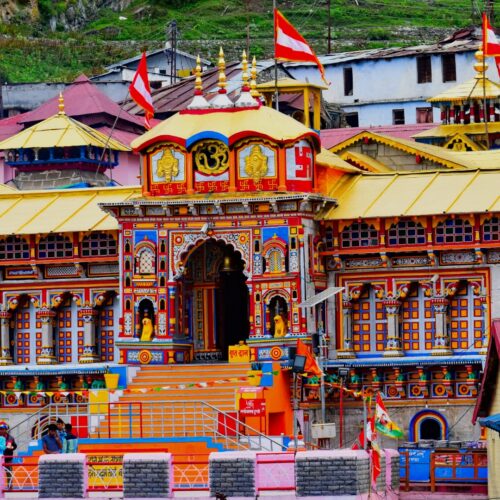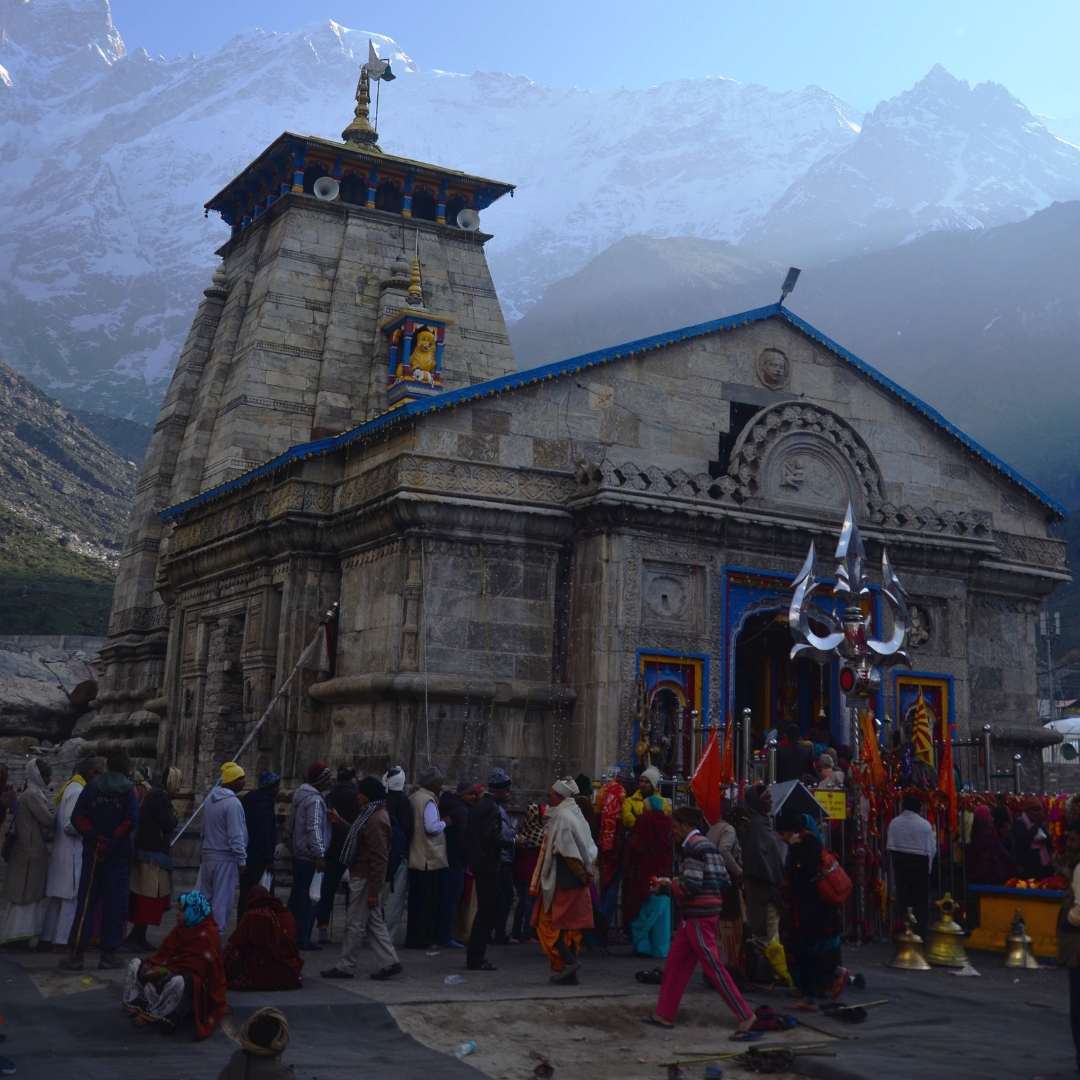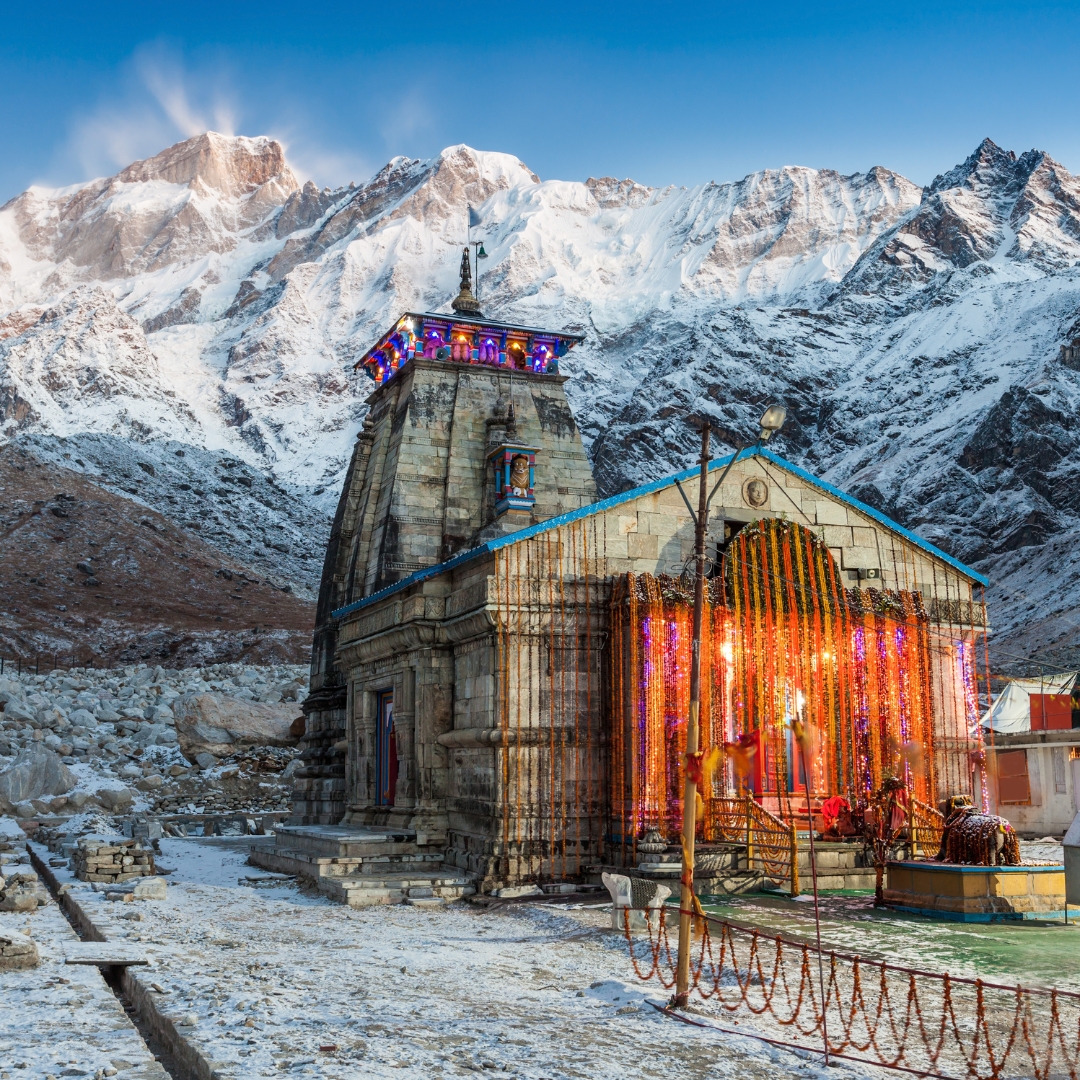

If you’ve ever planned a trip to Kedarnath Temple, you’ve probably heard one simple line everywhere:
“Bas 16 km ka trek hai.”
But the truth is—Kedarnath Yatra is not just about 16 km.
It’s a journey that begins much before the trek, tests your patience before your stamina, and teaches you things no website usually explains.
This is not a copied guide.
This is how the journey actually unfolds on the ground.
The Journey Starts Before You Even Walk
Most pilgrims believe their trek starts from Gaurikund.
In reality, your real experience begins at Sonprayag.
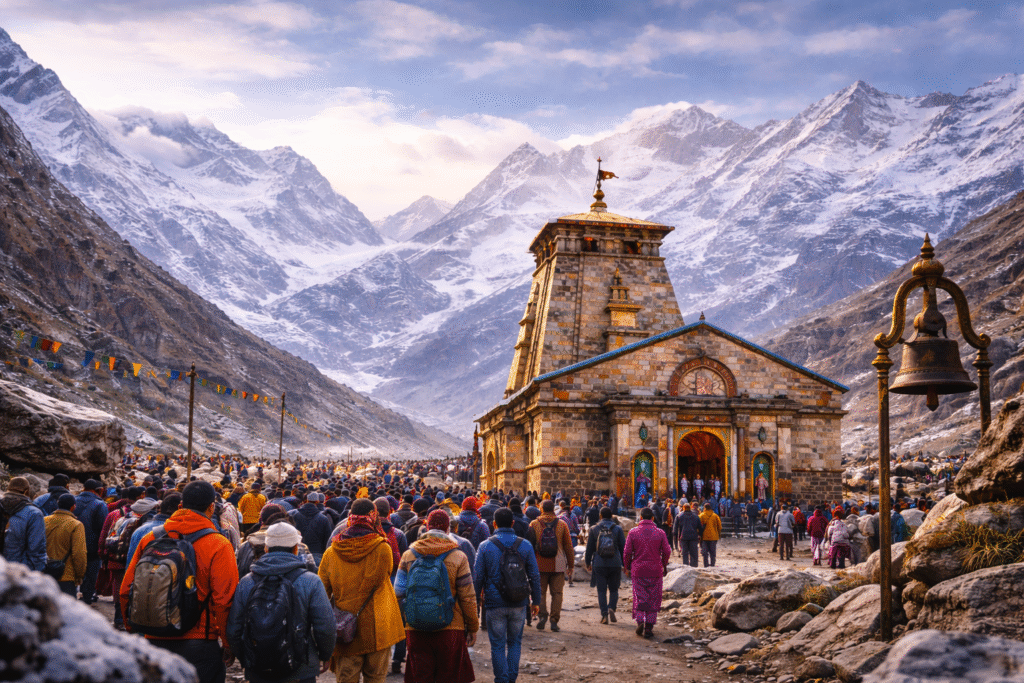
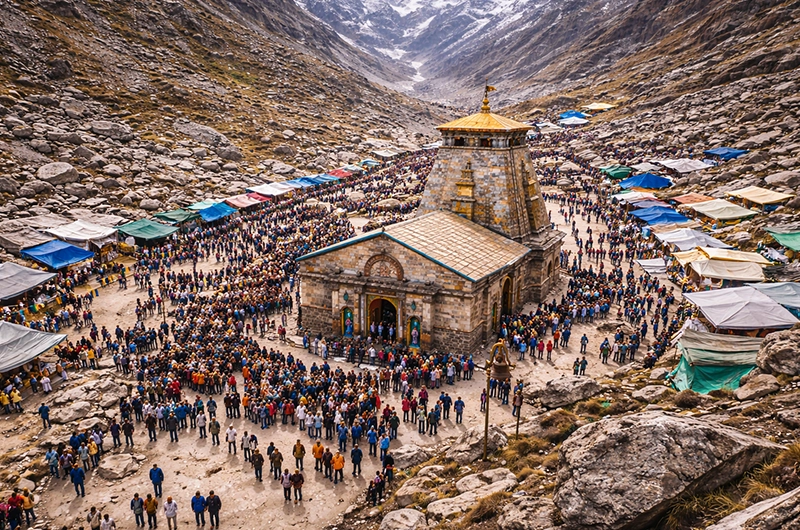
As you approach Sonprayag during peak months like May and June, the energy changes. The roads get narrower, the traffic slows down, and suddenly you realize—you’re not alone. Thousands of pilgrims, ponies, vehicles, and movement all merge into one single road.
Many times, due to this heavy rush, the police stop vehicles almost 1 km before Sonprayag market.
And that’s your first unexpected moment.
You step out… and walk.
Not a big distance—but enough to understand that this journey won’t always go as planned.
Registration – The Mandatory Pause
Near the Sonprayag police point, every pilgrim must go through registration verification.
If you’ve already registered, your details are checked.
If not, you’ll see people standing in queues at offline counters.
This is where the system slows you down—but also prepares you for what’s ahead.
Choosing How You Will Reach Kedarnath
At Sonprayag, you’ll notice something interesting—this is where people decide how they will complete their journey.
Some prepare to walk.
Some move toward pony counters.
Some enquire about doli or kandi.
It’s not just a booking point—it’s a decision point.
You’ll see elderly pilgrims choosing doli with relief, families selecting ponies, and young travelers confidently saying, “hum trek kar lenge.”
Every choice here shapes the next 16 km.
The Ride to Gaurikund (And Its Reality)
From Sonprayag, you take a shared vehicle toward Gaurikund.
It’s just 5 km.
But during peak rush, even this small distance doesn’t feel small.
Traffic builds up. Vehicles stop. Movement slows.
And sometimes, you again find yourself walking a few hundred meters before even reaching Gaurikund.
Gaurikund – Where Faith Meets the First Step
Finally, you reach Gaurikund.
Before starting the trek, many pilgrims visit the Gauri Mata Temple and take a dip in the natural hot water kund. It’s not just tradition—it’s like preparing yourself mentally.
Because once you start walking, there’s no shortcut ahead.
The Trek – What It Actually Feels Like
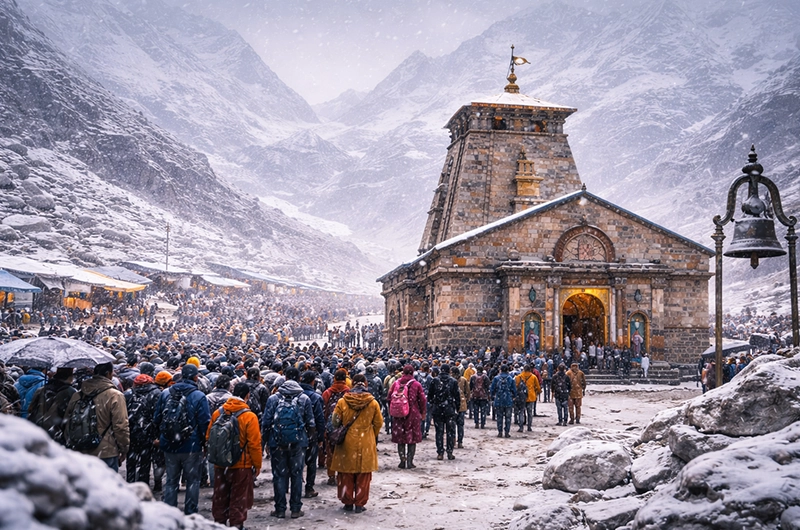
The Kedarnath trek is officially around 16 km—but it doesn’t feel like one continuous stretch. It feels like phases.
The First Kilometer – Reality Hits
The moment you start, the climb is steep.
This is where most people think: “Yeh toh expected nahi tha.”
Your body is fresh, but your breathing changes quickly.
This first kilometer is less about stamina and more about mindset.
Till Rambara – Finding Your Rhythm
As you move ahead toward Jungle Chatti and Bheembali, the trek becomes more stable.
You’ll see:
Small shops
Tea stalls
Medical points
Police assistance booths
The climb is gradual here. Not easy—but manageable.
This is where you settle into your pace.
After Rambara – The Real Test Begins
Once you cross Rambara (around halfway), the trek changes.
The slope increases.
Your legs feel heavier.
Breaks become more frequent.
Stops like Lincholi and Chhani Camp come along—but this is where the altitude and effort start working together.
This is the part where many pilgrims slow down significantly.
Nearing Kedarnath – Energy Returns
As you approach the upper region, something changes again.
You start seeing the valley open up.
You get glimpses of the Kedarnath region.
And suddenly, even with tired legs—you feel motivated.
The Final Stretch – Emotion Over Effort
Around the last 1 km, the route becomes relatively straight compared to earlier sections.
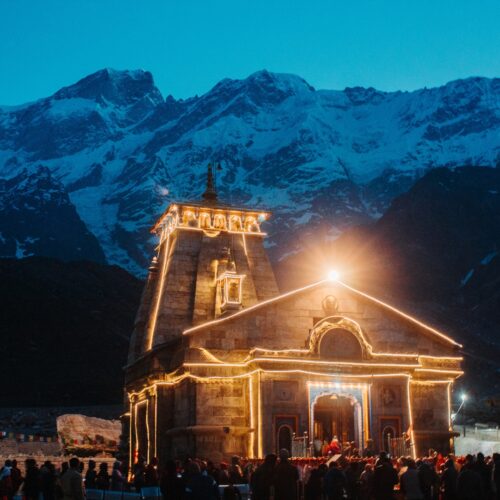
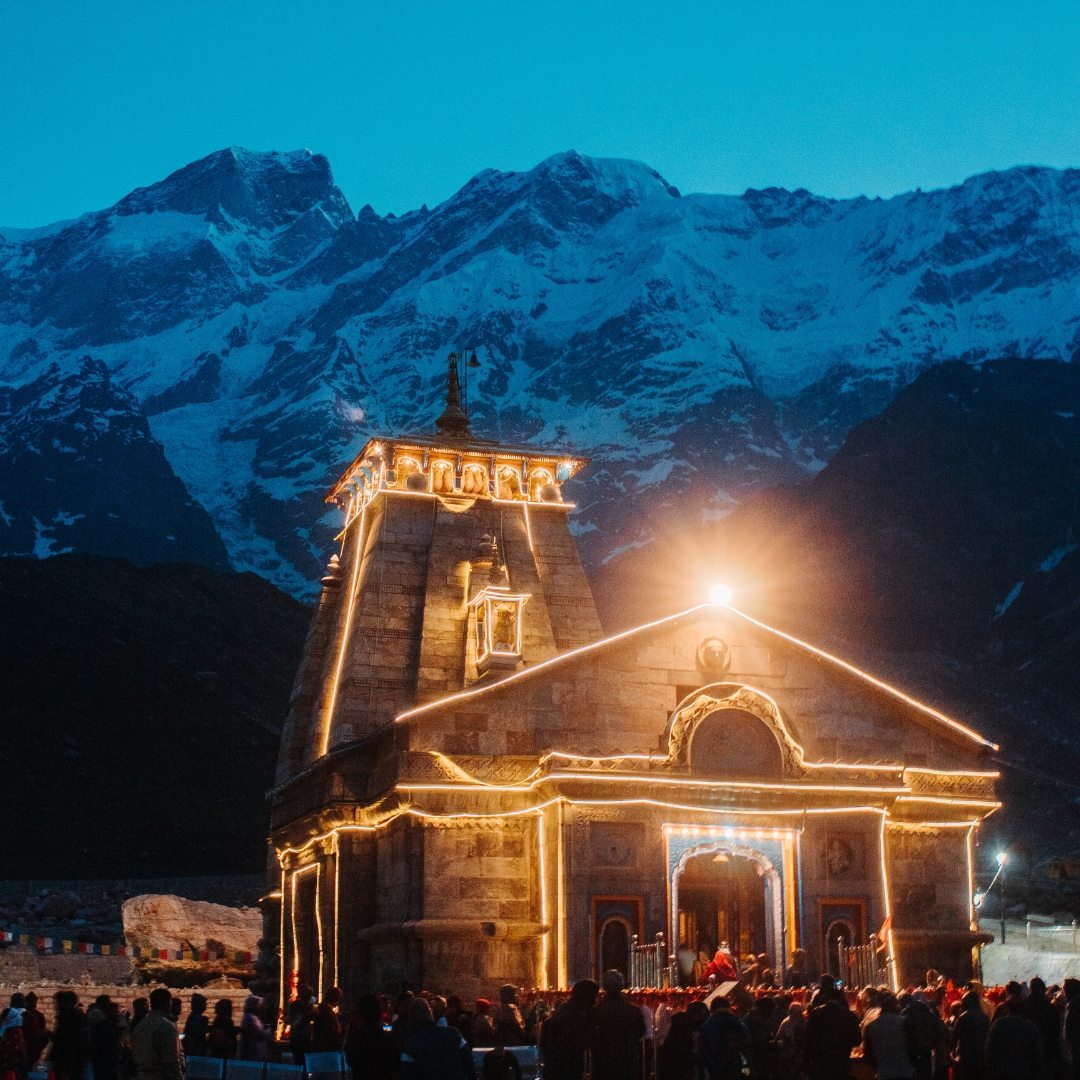
And then… you see it.
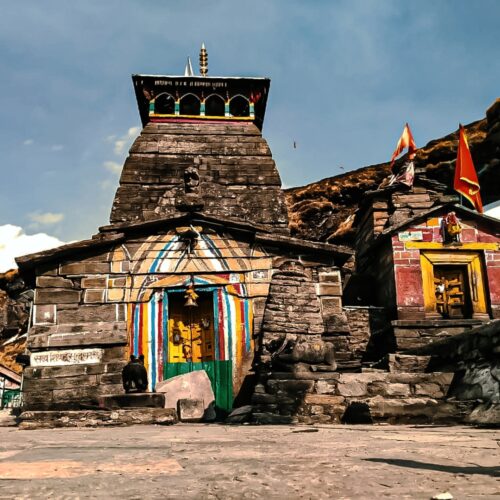
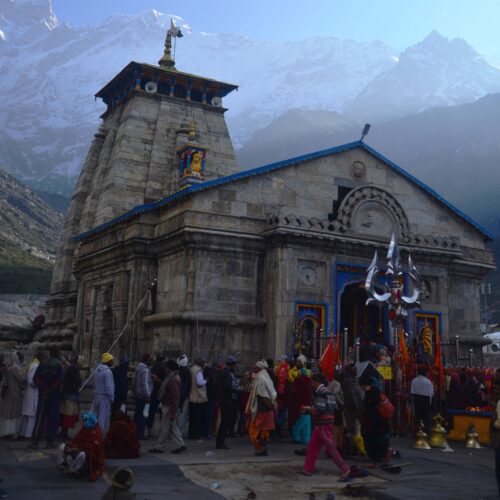
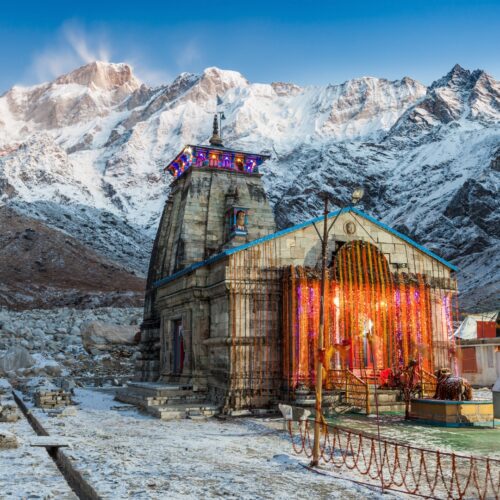
The temple.
At that moment, the entire journey—fatigue, effort, delays—everything fades into the background.
If You Don’t Want to Trek
Not everyone needs to walk—and that’s completely okay.
From Sonprayag/Gaurikund, you have options:
Pony (most common, budget-friendly)
Doli (comfortable, ideal for elderly)
Kandi (for children/lightweight passengers)
Each option has its own cost, comfort level, and availability—but the important thing is:
No one is forced to trek
The Truth About Helicopter Booking
Now let’s talk about the biggest misconception.
Helicopter tickets are booked through
IRCTC Heli Yatra portal
On the day bookings open, thousands of people try at the same time.
What actually happens?
Website slows down
Pages fail to load
Tickets sell out within minutes
And then comes the confusion
people start calling agents.
Here’s the truth:
👉 No one has special access
👉 Everyone uses the same system
👉 Most “guaranteed ticket” claims are scams
With around 30,000 pilgrims daily and very limited helicopter capacity, getting tickets is simply a matter of luck and timing.
What Actually Makes This Journey Easy
From a local perspective, Kedarnath Yatra becomes easy when:
You start early
You don’t rush the first 3 km
You choose the right option (trek/pony/doli)
You stay patient in crowded areas
This is not a race—it’s a paced journey.
Planning Matters More Than Strength
Most difficulties in Kedarnath Yatra are not because of the trek itself—but because of poor planning.
If you want a smoother experience, you can always explore
Travelophila complete Char Dham Yatra packages with proper guidance and local support
Because when your logistics are handled well, the journey feels completely different.
Summery
Kedarnath is not just about reaching a destination.
It’s about understanding the journey.
Yes, it’s long.
Yes, it can be tiring.
But with the right mindset and planning—
Anyone can complete it.

Shubhank is a lifelong explorer and storyteller, born and raised in the scenic hills of Garhwal, Uttarakhand. With a deep connection to the mountains, valleys, and sacred trails of his homeland, he helps travelers discover the heart of Uttarakhand beyond the usual tourist spots.
Friends and travelers from across India often ask him: “Where should we go in Uttarakhand?” Shubhank’s answer comes from experience — the valleys he grew up in, the treks he has hiked since childhood, and the sacred routes his elders still walk. Through his writing, he shares personal insights, local stories, and practical tips that make every journey meaningful, memorable, and authentic.
Specializes in: Uttarakhand Treks • Cultural & Spiritual Journeys • Offbeat Hill Stations • Local Experiences
Writing Style: Personal, immersive, and experience-driven
Travel Philosophy: “Explore the hills as if they are your home, and every journey will tell a story.”